

When it comes to vehicle maintenance, choosing the right lubricant matters just as much as any hardware component. Many confuse transmission fluid vs gear oil, but they serve very different purposes. In systems where friction, pressure, and temperature constantly interact, using the correct oil ensures smooth operation, long component life, and optimal performance. Let’s break down the technical distinctions that matter on the shop floor.
Why It Matters to Know the Difference of Transmission Fluid vs. Gear Oil
Using the wrong oil can result in transmission damage, poor shifting, or even gearbox failure. For mechanics and fleet owners, understanding the role of transmission fluid vs gear oil isn’t just academic; it’s essential for making informed maintenance choices. The two fluids differ significantly in their behavior under load, their formulation, and the types of drivetrains they’re suited for.
Recognizing where transmission fluid vs gear oil fits into your service routine can prevent wear and extend component life. Each is designed to handle different mechanical stresses, and substituting one for the other can compromise vehicle performance.
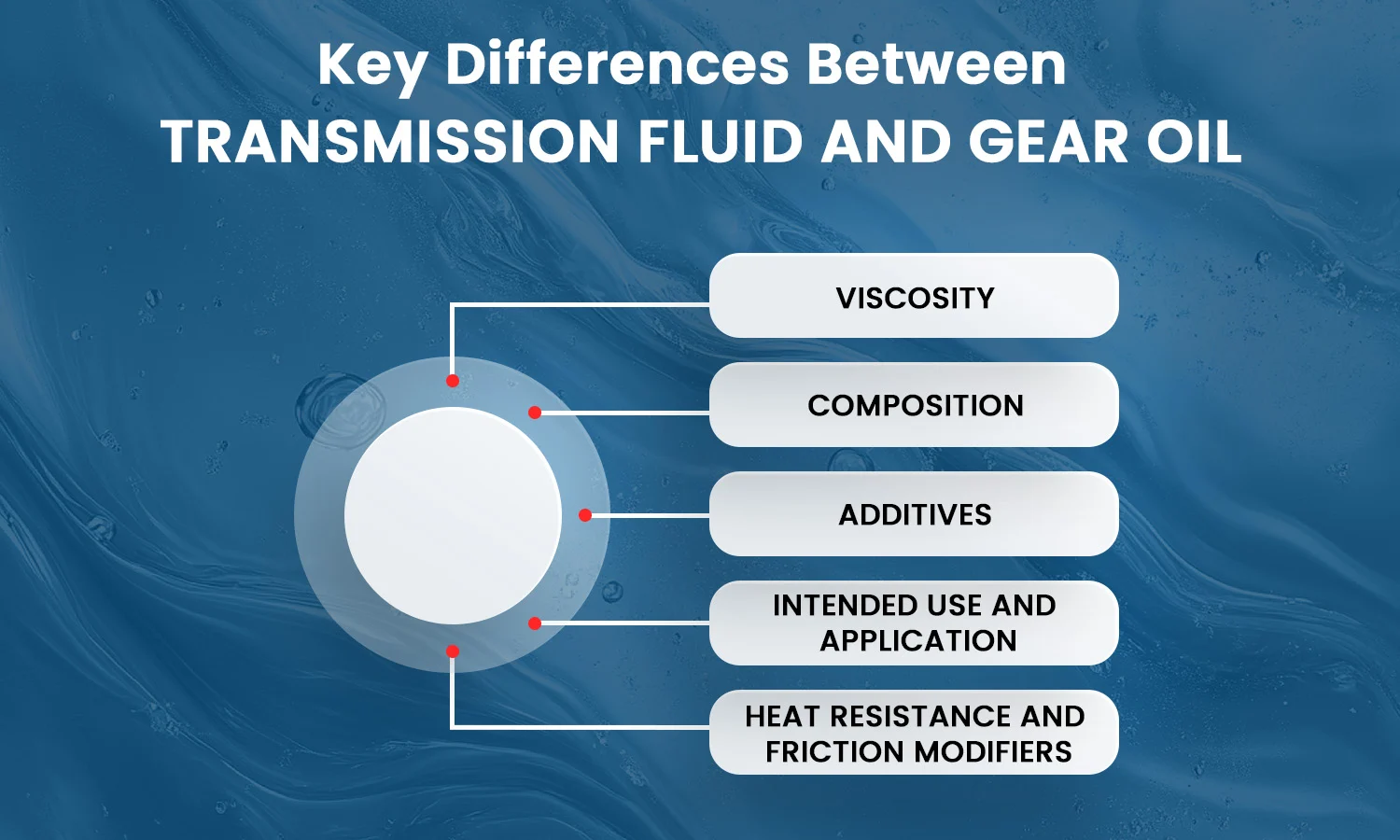
Key Differences Between Transmission Fluid and Gear Oil
Using the wrong oil can result in transmission damage, poor shifting, or even gearbox failure. For mechanics and fleet owners, understanding the role of transmission fluid vs gear oil isn’t just academic; it’s essential for making informed maintenance choices. The two fluids differ significantly in their behavior under load, their formulation, and the types of drivetrains they’re suited for.
Composition
The chemical makeup of transmission fluid vs gear oil differs based on use-case. Gear oils often use mineral or synthetic base stocks with extreme pressure additives. Transmission fluids, however, include detergents, dispersants, and seal conditioners for automatic systems.
Additives
Additive packages in transmission fluid vs gear oil are built to handle different mechanical demands. Gear oil contains compounds like sulfur and phosphorus for extreme pressure conditions. Transmission fluid uses friction modifiers and anti-foam agents that support smoother gear changes and cooler operation.
Intended Use and Application
Where Are They Used? Real-World Applications of Transmission Fluid vs. Gear Oil
Cost-conscious customers often focus on gear oil price, but the better question is which product delivers performance under pressure. The best gear oil is one that maintains film strength, resists oxidation, and performs consistently — something Revia gear oils are engineered for.
FAQs
No. Gear oil and transmission fluid are formulated differently. Gear oil is thicker and made for manual gearboxes; transmission fluid is lighter and made for automatic systems.
It is often referred to as ATF (Automatic Transmission Fluid), particularly in automatic vehicle systems.
Not recommended. Transmission fluid lacks the extreme pressure additives needed for gear systems and may lead to component wear or failure.
Use gear oil. Differentials require heavy-duty, high-viscosity oil to handle torque transfer and protect gears from friction and heat.