

A small patch of oil on your floor mat or a faint burning smell under your car might not seem urgent. But these are often the first signs of gear oil leakage. Left unchecked, even a slow drip can turn into transmission damage, seal failure, or full breakdown. This guide will walk you through real-world signs, where to look, and what you can do about it — whether you’re a DIY owner or a workshop professional.
What Causes Gear Oil Leakage in Vehicles?
Most gear oil leakage starts with aging components or poor installation. The common culprits include:
- Cracked gaskets or worn oil seals
- Improperly torqued or overfilled drain plugs
- Rough terrain that loosens fittings over time
- Heat cycles that degrade sealing surfaces
- Use of incorrect or low-quality gear oil
If you’re servicing an older vehicle or one with high mileage, always inspect seals during a gear oil replacement. It’s easier to prevent than to repair.
Early Signs and Symptoms of Gear Oil Leaks
Before there’s a puddle, the vehicle often talks. You just have to listen — and look.
- Oily residue around the gearbox or differential
- Burnt or sweet-smelling odor after driving
- Slight grinding or stiffness in gear engagement
- Dark, sticky marks on your driveway
- A noticeable drop in gear oil level when checked
These signals are your first warning. Catching a gear oil leak here can save you thousands later.
How to Visually Inspect for Gear Oil Leakage
Lift the vehicle safely and use a torch to scan key areas. Start with:
- The bottom of the gearbox and along axle seals
- Fill and drain plug joints
- Housings where the driveshaft enters the transmission
If your finger picks up wetness or oil film, wipe the area clean and recheck after a short drive. This method helps you confirm gear oil leakage instead of residue from an older spill.
Common Gearbox Components That Leak Oil
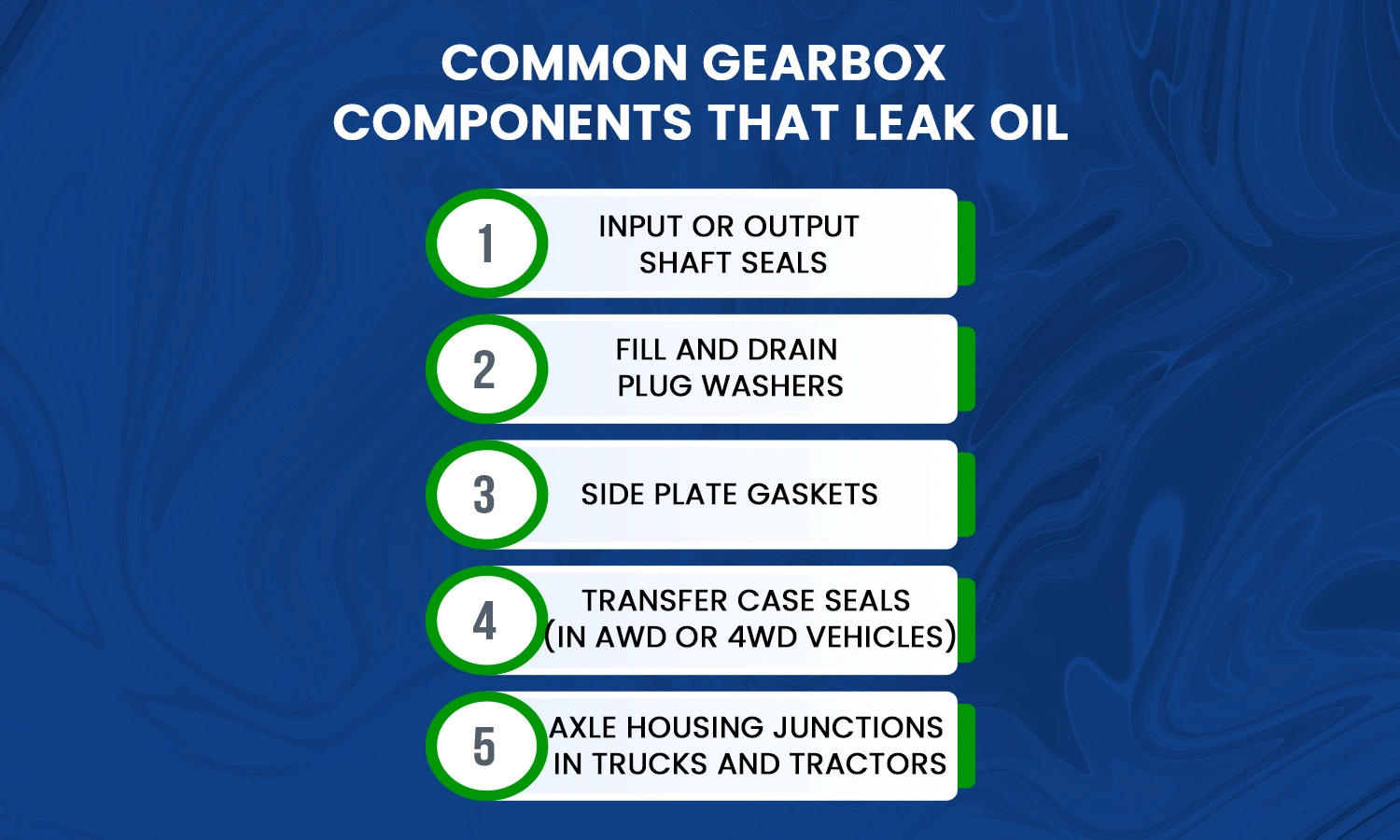
A true gear oil leakage problem often comes from:
- Input or output shaft seals
- Fill and drain plug washers
- Side plate gaskets
- Transfer case seals (in AWD or 4WD vehicles)
- Axle housing junctions in trucks and tractors
In gear oil leakage in car systems, the leak may track toward the wheels or tailpipe area. Don’t let its location fool you — oil moves under heat and pressure.
Risks of Ignoring Gear Oil Leaks in Cars or Trucks
Ignoring a slow oil leak from the gearbox often leads to:
- Low lubrication on gear teeth
- Metal-to-metal contact during shift
- Overheating in the transmission case
- Damaged seals from dry operation
- Complete transmission failure over time
Unlike engine oil, gearbox oil doesn’t evaporate or burn off. If it’s low, it’s leaking — and it needs attention.
DIY Steps to Fix Minor Gear Oil Leaks
For minor leaks, here are steps that help:
- Re-torque the drain and fill plugs to spec
- Replace plug gaskets or copper washers
- Clean the surface and reseal visible cracks with approved sealant
- In some cases, adding a compatible oil stop additive may help slow seepage
These methods may slow or stop the leak temporarily, but don’t substitute them for proper inspection. If a gear oil leakage returns, escalate to full diagnosis.
When to Consult a Mechanic for Gear Oil Leak Repair
If you’re seeing the following, DIY won’t be enough:
- Leaks returning soon after cleanup
- Shifting problems, noise, or vibration
- Signs of oil near internal bearings or clutch packs
- Metal flakes in drained oil
- Drastic drop in gear oil level between checks
If you’re seeing the following, DIY won’t be enough:
How to Prevent Gear Oil Leaks in the Future
Prevention starts with habits:
- Stick to your scheduled gear oil change interval
- Use only vehicle-approved sealants and fluids
- Avoid overfilling or under-tightening
- Inspect seals during any gear oil change
- Respond early to signs like stains or smell
A yearly inspection under the vehicle or a quick service bay check can help stop gear oil leakage before it gets serious.
Why Choose Revia Gear Oils for Long-Lasting Performance
Not all oils are created equal. Low-grade oil can raise internal pressure, break down seals, or leave residue. Revia gear oils are made to reduce foam, maintain seal compatibility, and resist thermal breakdown — key to preventing gear oil leakage.
Whether you’re managing passenger cars, farm machinery, or fleet vehicles, Revia offers consistent viscosity, long drain life, and less maintenance stress.
Key Takeaways
- Gear oil leakage often starts small and shows up through smell, stains, or rough shifting
- Early inspection and cleaning can help catch the source before damage builds
- Minor leaks can be fixed at home, but don’t ignore repeat leaks
- Always check gear oil level during routine service
- Revia gear oils reduce stress on seals and support cleaner transmission performance
FAQs
How to identify where an oil leak is coming from?
Clean the suspected area and drive 10–15 minutes. Recheck for fresh oil. This helps pinpoint the gear oil leak source without guesswork.
Can I drive with a gear oil leak?
Not safely. Even a small oil leak can affect gear protection and result in costly repair if ignored.
How much does it cost to fix a gear oil leak?
Simple plug seal repairs are affordable. But deep gear oil leakage fixes involving seals or gaskets can cost significantly more.
How to stop a gearbox from leaking?
Tighten plugs, replace gaskets, and avoid poor-quality oil. In tough cases, a mechanic may be needed to stop engine oil leaks at the root.