

Transmission systems need more than just mechanical strength. They need oil that stays effective under load. Following the right gear oil change interval helps prevent wear, temperature spikes, and internal damage. It’s not just a maintenance task. It’s what keeps your gears running the way they were designed to.
What Is the Life of Gear Oil?
Your gear oil change interval depends on how your vehicle is used. For most passenger cars, it’s recommended between 30,000 to 60,000 kilometers. In tractors or commercial vehicles, you may need to change it earlier because of higher load and continuous operation.
Some grades like 75w90 gear oil or 80w90 gear oil perform better under heat and pressure, but they still need to be changed on time. Use your owner’s manual or a trusted gear oil guide to stay on track with your oil schedule.
Changing oil at the correct gear oil change interval protects your system from early failure.
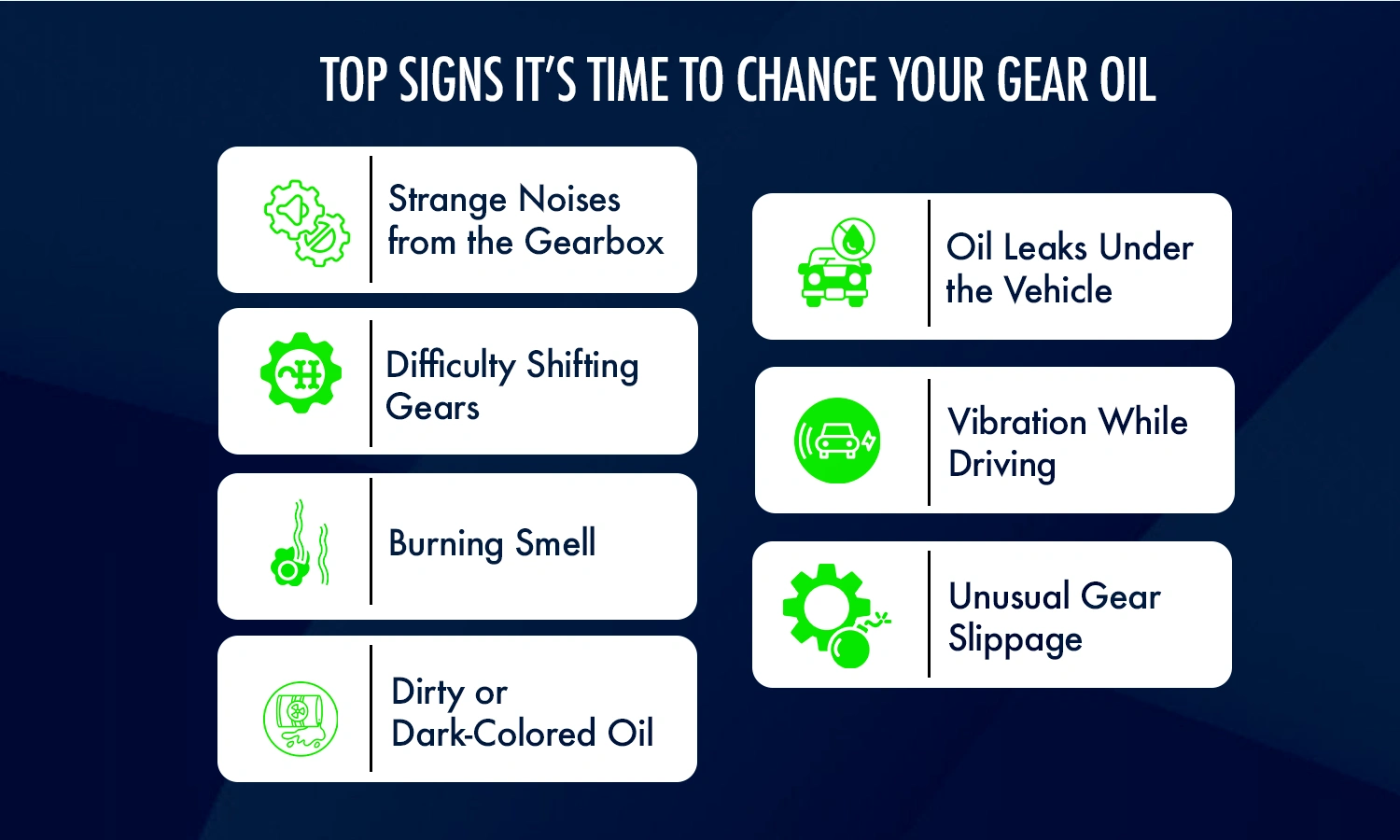
Top Signs It’s Time to Change Your Gear Oil
Here are common signs that your gear oil change interval is overdue:
-
Strange Noises from the Gearbox
Squealing, grinding, or humming sounds suggest the oil film has worn down. -
Difficulty Shifting Gears
Rough shifts or hesitation may come from old or low-quality gearbox oil. -
Burning Smell
A burnt smell means the oil has overheated and lost its protective strength. -
Dirty or Dark-Colored Oil
If the oil looks black or contains metal dust, it's time to change it. -
Oil Leaks Under the Vehicle
Loss of gear oil level can lead to uneven lubrication and part damage. -
Vibration While Driving
Vibration is often caused by poor lubrication inside the gearbox. -
Unusual Gear Slippage
If gears slip or don’t stay engaged, the oil may no longer be holding proper viscosity.
How to Check Your Gear Oil Level at Home
To avoid low gear oil level, you can inspect it yourself using a simple tool. Open the fill bolt on your transmission and use your finger or a dipstick to measure. The oil should be near the edge of the fill hole. If it’s low or looks dirty, replace it.
You can also keep a gear oil compatibility chart to track your oil type, grade, and last change date for every vehicle in your care.
What Happens Inside Your Gearbox When You Delay a Gear Oil Change
If the gear oil change interval is missed, the oil begins to break down. It loses the ability to reduce friction and control heat. Gear teeth start to wear. Bearings may get scored. Once that damage starts, the cost of repair is far higher than the oil itself.
Old oil also picks up fine metal particles. These stay in circulation and add more wear. That’s why sticking to your proper gear oil change routine matters, no matter the vehicle type.
Choose Revia Gear Oil for Consistent Transmission Protection
Revia oils are formulated to keep gearboxes protected under all types of use. Whether you are running farm machinery or passenger cars, our grades — including 80w90 gear oil and75w90 gear oil — offer dependable protection through every scheduled gear oil change interval.
We build our oils to suit Indian road and working conditions. That includes the right balance of viscosity, temperature control, and long service life.
Key Takeaways
- Your vehicle’s gear oil change interval protects it from internal wear
- Delaying it can lead to breakdown and increased maintenance
- Common symptoms include burnt smell, poor shifting, and low oil
- Keep gear oil level within range through regular inspections
- Use Revia oil and follow the correct gear oil change interval for best performance
FAQs
Why is a gear oil change required?
Without regular changes, oil breaks down and no longer protects gears. Following your gear oil change interval prevents that damage.
How many km should I change gearbox oil?
The gear oil change interval is usually 30,000 to 60,000 km, but heavy-duty use may require earlier service.
What happens if you don’t change gear oil on time?
Delaying the gear oil change interval can lead to friction wear, overheating, and failure of internal components.
How do you know when gearbox oil needs to be changed?
Follow the gear oil change interval in your manual, and look for signs like noise, hard shifting, or dark oil.