

What are the Grades of Gear Oil? (Understanding the Numbers)
When it comes to transmission maintenance, not all lubricants are created equal. Understanding the meaning behind a gear oil grade helps you choose the right oil for specific components and driving conditions. Whether you’re working with commercial vehicles, tractors, or passenger cars, the correct gear oil grade impacts wear, efficiency, and component life.
- Lower numbers before the W mean better flow in cold conditions.
- Higher second numbers mean better protection under heat and load.
For example:
- 80W90 = standard grade for most gearboxes and axles
- 85W140 = thicker oil used for high-load applications
You’ll often see these in a gear oil grades list or mentioned in service manuals. Choosing the correct gear oil grade keeps gears well-lubricated, prevents metal contact, and reduces wear.
What is 80W-90 Gear Oil Used For?
80W90 gear oil is widely used in manual transmissions, rear axles, and differentials of passenger and light commercial vehicles. It offers excellent performance across moderate temperature ranges and provides adequate film strength for general use.
Revia’s gear oil 80w90 is engineered with anti-wear additives and oxidation stability, making it suitable for city, highway, and light off-road conditions. For smaller components, 80w90 gear oil 120 ml is commonly used in two-wheelers and compact applications.
What is 85W140 Gear Oil Used For?
- Commercial trucks and trailers
- Agricultural tractors
- Construction equipment
- Differential systems in high-torque vehicles
This oil provides enhanced film strength and thermal stability. It’s ideal for Indian conditions where heat and load are constant. Mechanics looking for durable performance under pressure turn to 85W140 when basic grades no longer hold up.
This gear oil grade resists breakdown, maintains viscosity, and protects against shearing even after extended drain intervals.
What is the Difference Between 80W-90 and 85W140 Gear Oil?
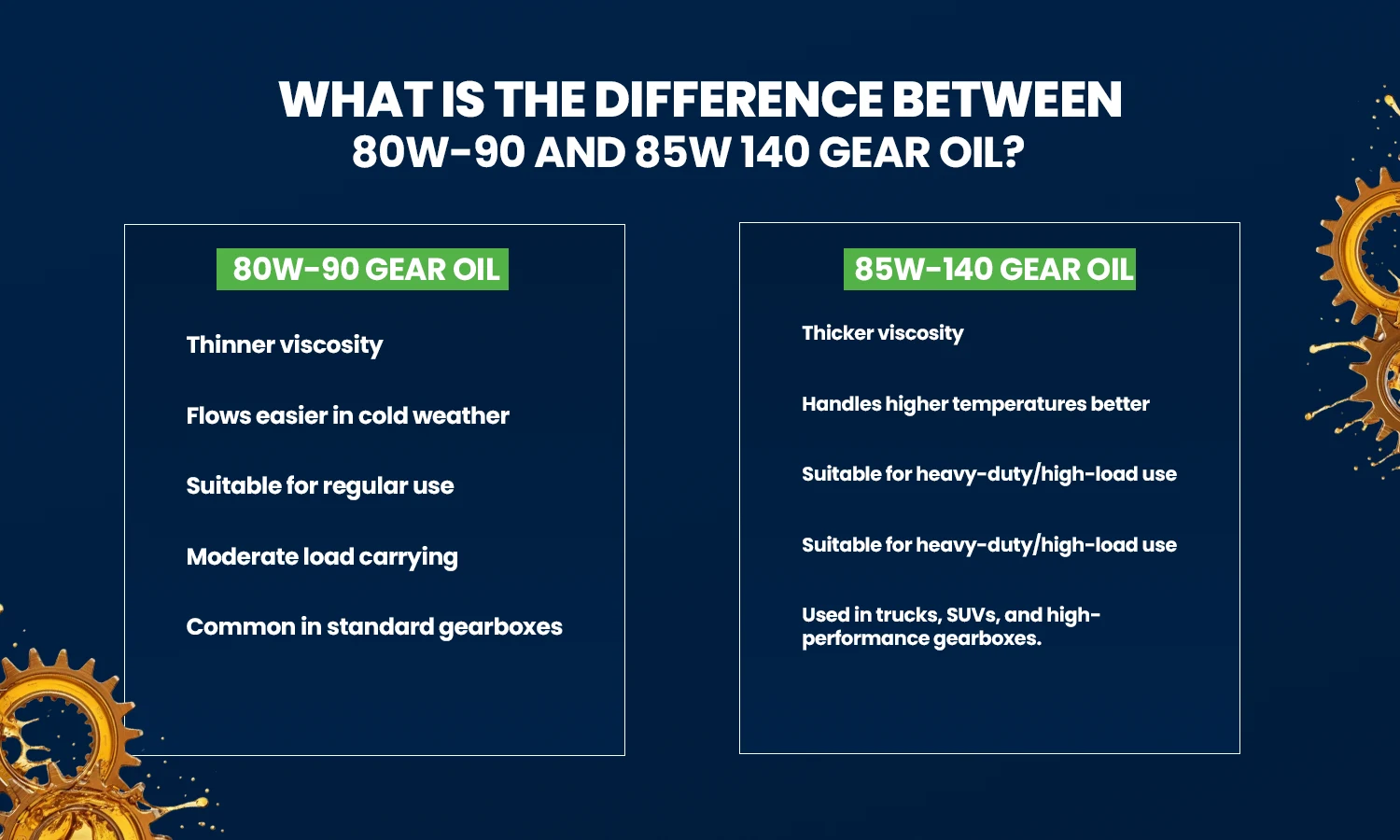
Feature |
80W90 Gear Oil |
85W140 Gear Oil |
|---|---|---|
|
Viscosity at Low Temp |
Lighter (easier cold start) |
Slightly heavier |
|
Operating Load |
Medium-duty |
Heavy-duty |
|
Typical Use |
Cars, LCVs |
Trucks, tractors |
|
Film Strength |
Standard |
High |
|
Thermal Stability |
Moderate |
Excellent |
Choosing the Right Gear Oil for Long-Term Performance
The best choice is not always the most expensive or the thickest. It’s about matching the gear oil grade to your vehicle’s actual usage. For standard city driving, gear oil 80w90 works well. For constant load-bearing tasks, 85w140 gear oil provides the required durability.
When buying oil, don’t just look at the label. Consider:
- OEM recommendations
- Usage type (city, off-road, long-haul)
- Gear type and housing size
- Compatibility of gear oil grades with your gearbox
FAQs
Yes, if the system is not under extreme load. However, 85W grades offer thicker protection at operating temperature, making them better for high-stress environments.
Common grades include 75W90, 80W90, and 85W140, depending on the gearbox design and usage conditions.
Refer to your vehicle’s service manual or check approved gear box oil grade. Match load conditions, climate, and vehicle type to the correct gear oil grade.
Which gear oil is best for heavy-duty vehicles?